What Is Amazon PPC? A Complete Beginner's Guide
Contents expand_more
What Is Amazon PPC?
Amazon PPC (Pay-Per-Click) is Amazon’s advertising system where sellers pay only when a shopper clicks on their advert.
You set a maximum bid for keywords. Amazon runs an auction against other advertisers. When your advert wins and someone clicks, you pay.
In 2025, Amazon attracts more than 2.7 billion visits per month. 66% of shoppers in the US start their product searches directly on Amazon, ignoring Google completely. With fewer organic spots on the first page and more competition than ever, paid advertising is essential for visibility.
The compounding benefit: PPC sales directly improve your organic search ranking. Products without a sales history struggle to rank organically. PPC creates the sales velocity that tells Amazon your product deserves visibility.
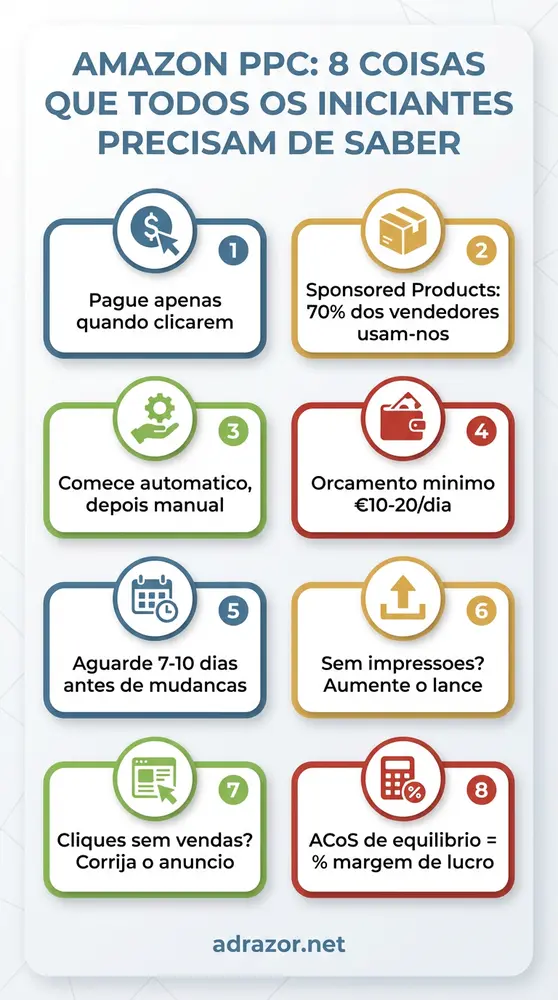
Infographic showing 8 essential Amazon PPC tips for beginners including starting with Sponsored Products, a budget of €10-20 per day, waiting 7-10 days before optimising, and understanding that break-even ACoS equals the profit margin percentage
The Three Types of Amazon PPC Ads
Amazon offers three ad formats. Each serves a different objective. For beginners, one stands out clearly.
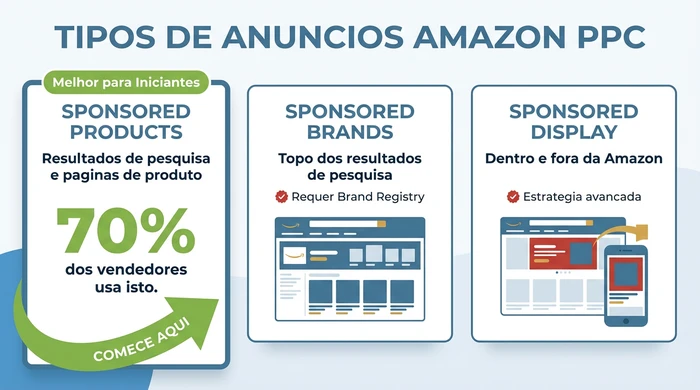
Comparison diagram of the three Amazon PPC ad types: Sponsored Products (best for beginners, used by 70% of sellers), Sponsored Brands (requires Brand Registry), and Sponsored Display (advanced strategy), with an arrow indicating that beginners should start with Sponsored Products
Sponsored Products (Start Here)
Sponsored Products are adverts for individual product listings that appear in search results and on product pages.
This is the most common Amazon ad type. 70% of third-party sellers use Sponsored Products. They look like regular listings with a small “Sponsored” label, making them easy to trust and more likely to win clicks.
The requirements are minimal: an active seller account on a Professional plan and a product in the Buy Box.
Sponsored Brands
Sponsored Brands feature your brand logo, a custom headline and multiple products at the top of search results.
The catch: you need enrolment in the Brand Registry, which requires a registered trademark.
These adverts build brand awareness. Consider them after mastering Sponsored Products.
For a more detailed guide on Sponsored Products set-up, see how to set up Amazon Sponsored Products.
Sponsored Display
Sponsored Display reaches shoppers on and off Amazon based on their browsing behaviour.
They are powerful for retargeting - showing adverts to people who viewed your product but did not buy. This is more advanced territory. Save it until you understand the fundamentals.
How Amazon PPC Works: Essential Metrics
Before launching campaigns, understand these four metrics. They determine whether you are making or losing money.
The Four Core Metrics
| Metric | Full Name | What It Means |
|---|---|---|
| CPC | Cost Per Click | What you pay for each click on the advert |
| CTR | Click-Through Rate | Percentage of impressions that get clicks |
| CVR | Conversion Rate | Percentage of clicks that become sales |
| ACoS | Advertising Cost of Sales | (Ad Spend / Ad Sales) x 100 |
CTR (Click-Through Rate) tells you whether your advert attracts attention. CVR (Conversion Rate) tells you whether your listing converts visitors. Both matter, but CVR affects profitability more directly.
Understanding ACoS
ACoS (Advertising Cost of Sales) is the percentage of ad revenue spent on adverts.
ACoS = (Ad Spend / Ad Sales) x 100
Example: Spend €20, generate €100 in sales ACoS = (€20 / €100) x 100 = 20%
A lower ACoS looks better. But here is what most guides will not tell you.
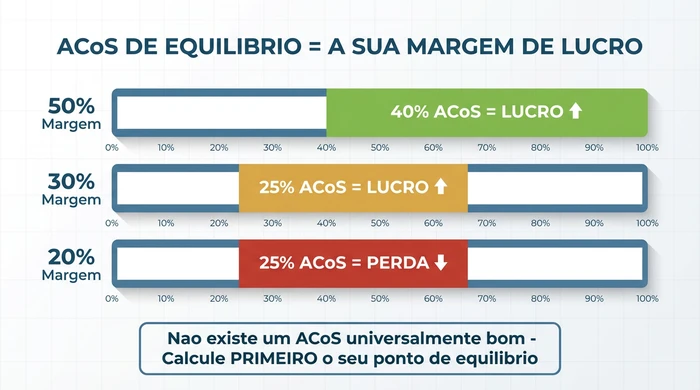
Diagram explaining the break-even ACoS concept showing that a 40% ACoS is profitable with a 50% margin, 25% ACoS is profitable with a 30% margin, but 25% ACoS loses money with only a 20% margin, emphasising that there is no universally good ACoS
Break-Even ACoS = Profit Margin %
Example:
- Product sells for €30
- Amazon fees + product cost = €18
- Profit before ads = €12
- Profit Margin = €12 / €30 = 40%
- Break-Even ACoS = 40%
Any ACoS below 40% = profit. Above 40% = loss.
A 40% ACoS that generates consistent profit beats a 15% ACoS that produces one sale a week. Focus on total profit, not percentages.
For a deeper understanding of this concept, see our guide on ACoS vs TACoS.
Automatic vs Manual Targeting
One of the most common questions beginners ask: should I use automatic or manual targeting?
The answer is straightforward. Start with automatic. Move to manual.
Automatic Targeting
Automatic targeting lets Amazon’s algorithm decide when to show your adverts based on the product’s listing information.
Advantages:
- Requires no keyword research
- Discovers keywords you would never think of
- Faster set-up
- Reveals what actually converts
Disadvantages:
- Less control over where the budget goes
- Can show for irrelevant searches
Manual Targeting
Manual targeting puts you in control. You choose specific keywords or products to target.
Advantages:
- Total control over targeting
- Can focus budget on proven winners
- More precise bid management
Disadvantages:
- Requires keyword research
- Misses opportunities you do not know about
To master keyword research for manual campaigns, see our complete Amazon keyword research guide.
The Recommended Flow
Here is the process successful sellers use:
- Week 1-4: Launch an automatic campaign, let it run
- Week 2-3: Review the search terms report in Seller Central
- Week 3-4: Identify search terms that generate sales
- Week 4+: Create a manual campaign targeting proven winners
- Ongoing: Add non-converting terms as negative keywords
This approach uses Amazon’s data to inform your manual strategy. You are not guessing which keywords matter - you have proof.
For more on understanding the difference between keywords and search terms, the distinction is critical for optimisation.
Understanding Match Types
Match types control how loosely or strictly Amazon matches your keywords to customer searches. Get this wrong and you will waste money or miss opportunities.
The Three Match Types
- Broad Match: Your advert shows for searches containing all your keywords in any order, plus variations and related terms
- Phrase Match: Your advert shows for searches containing your exact phrase, with additional words before or after
- Exact Match: Your advert shows for searches that closely match your keyword
Diagram explaining Amazon’s exact match behaviour showing that the keyword box of chocolates also matches box chocolates, boxes chocolate, and box for chocolates, but does NOT match chocolates box, illustrating that word order matters but singular plural does not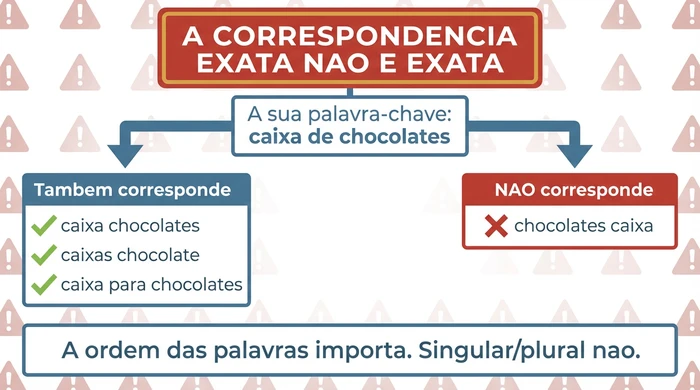
Understanding how Amazon actually interprets your keywords is essential to avoid costly mistakes. Tools like AdRazor can help reveal exactly how Amazon is matching your keywords to search terms, showing the singular/plural variations and stop words you might miss in manual analysis.
How to Start an Amazon PPC Campaign
Ready to launch? Here is the step-by-step process.
Before You Start: Pre-Launch Checklist
- The product listing is complete (title, bullets, images)
- The product is competitively priced
- The Professional seller account is active
- The product is eligible for the Buy Box
Reviews help but are not mandatory. A strong listing can convert without reviews. A weak listing will not convert even with them.
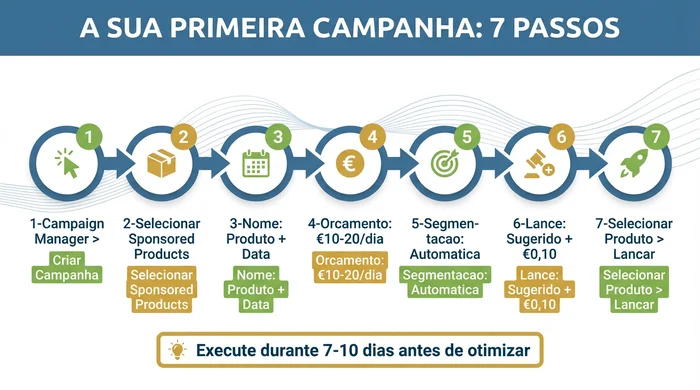
Step-by-step process flow showing 7 steps to set up a first Amazon PPC campaign: access the Campaign Manager, select Sponsored Products, name the campaign with product and date, set a daily budget of €10-20, choose automatic targeting, set the bid at suggested plus €0.10, select the product and launch, with a tip to run for 7-10 days before optimising
Step-by-Step Set-Up
- Navigate to Campaign Manager in Seller Central
- Click “Create Campaign” and select Sponsored Products
- Name your campaign descriptively (e.g. “Blue Widget - Auto - Dec2025”)
- Set the daily budget at €10-20 for testing
- Choose Automatic targeting for your first campaign
- Set the default bid at the suggested bid plus €0.10-0.20
- Select your product and launch
Recommended Settings for a First Campaign
| Setting | Recommendation | Rationale |
|---|---|---|
| Targeting | Automatic | Gather data without keyword research |
| Daily Budget | €10-20 | Enough significant data |
| Default Bid | Suggested + €0.10-0.20 | Ensures you get impressions |
| Campaign Duration | No end date | Run continuously until optimising |
Do not set an end date. You want continuous data, not a campaign that stops when you forget about it.
How Much Amazon PPC Costs and Troubleshooting
Something is underperforming. Before changing everything, diagnose the real problem.
The PPC Funnel Diagnosis
PPC works like a funnel. Problems at each stage have different causes and fixes.
| Funnel Stage | Metric | What Affects It | Where to Fix It |
|---|---|---|---|
| 1. Visibility | Impressions | Bid value, budget, keyword relevance | Campaign settings |
| 2. Interest | Click-Through Rate (CTR) | Main image, title, price, reviews | Product listing (visible in search) |
| 3. Conversion | Conversion Rate (CVR) | Bullets, images, A+, price, reviews | Product listing (full page) |
| 4. Profitability | ACoS vs Margin | CPC, CVR, product margin | Bids + listing quality |
Specific Fixes for Problems
Amazon PPC Troubleshooting Guide
- Increase your bid by 50-100%
- Increase the daily budget
- Check keyword relevance to your product
- Make sure the product is eligible for the Buy Box
- Improve the quality of the main image
- Optimise the first 60 characters of the title
- Check your price against competitors
- Review your star rating and number of reviews
- Check keyword relevance
- The problem is your listing, not your ads
- Improve bullet points with benefits
- Add more/better product images
- Check the quality of the A+ content
- Review your pricing strategy
- Address negative reviews
- First: Calculate your break-even ACoS (= profit margin %)
- If truly above break-even: Reduce bids by 10-20%
- Review the search terms report for irrelevant terms
- Add poorly performing terms as negative keywords
- Wait another 7 days, then reassess
For more on improving conversions, see how to create Amazon bullet points that sell and why conversion rate matters.
Common Mistakes and Next Steps
Learn from others’ expensive lessons, then understand what comes after the basics.
Mistakes to Avoid
Mistake #1: Changing Campaigns Too Frequently
The mistake: Adjusting bids and keywords every day or two based on small data samples.
Why it is wrong: Amazon’s algorithm needs 7-10 days of data to learn. Constant changes prevent learning.
Mistake #2: Obsessing Over ACoS
The mistake: Cutting every keyword with an ACoS above 25% regardless of profit margin.
Why it is wrong: A “good” ACoS depends entirely on your margin. A 35% ACoS is excellent with a 50% margin.
Mistake #3: Ignoring the Listing
The mistake: Blaming weak sales on PPC strategy when the listing is not converting.
Why it is wrong: The best adverts cannot sell a weak listing. If your page does not convert, more traffic just means more wasted clicks.
Mistake #4: Match Type Misunderstandings
The mistake: Assuming exact match means exactly what you typed, then aggressively adding negative keywords.
Why it is wrong: Amazon treats singular/plural as identical. A negative exact for “cheap shoes” also blocks “cheap shoe.”
Your Next Steps
After 2-4 weeks of data:
- Download the search terms report from Campaign Manager
- Identify search terms that generate sales
- Add non-converters as negative keywords
- Create a manual campaign targeting proven winners
As you become comfortable:
- Test Sponsored Brands (if Brand Registered)
- Experiment with placement bid adjustments
- Consider product targeting campaigns
Advanced optimisation (future reading):
- Understanding TACoS (Total ACoS including organic sales)
- Profit-based vs ACoS-based optimisation
- Advanced targeting strategies
The fundamentals in this guide build the foundation. Advanced strategies build on working basics.
Frequently Asked Questions
How much should I spend on Amazon PPC as a beginner?
Start with €10-20 per day per product. This provides enough data for meaningful insights within 7-10 days without significant financial risk. Scale up once you understand what works and can identify winning keywords.
What is a good ACoS for Amazon PPC?
There is no universally good ACoS. Your break-even ACoS equals your profit margin percentage. A 40% ACoS is excellent if your margin is 50%. A 20% ACoS loses money if your margin is 15%. Calculate your break-even point first, then judge performance against your specific number.
Should I use automatic or manual targeting first?
Start with automatic targeting. It requires no keyword research and reveals which search terms actually convert for your product. After 2-4 weeks, use that data to build targeted manual campaigns focusing on proven winners.
How long does Amazon PPC take to work?
Expect 1-3 days for initial learning, 4-7 days for early patterns, and 2-3 weeks for actionable insights. Consistent optimisation over 2-3 months produces the best results. Do not judge campaign performance in the first week.
Is Amazon PPC worth it for new sellers?
Yes. PPC sales directly influence organic ranking, helping new products with no sales history gain visibility. New products benefit especially because they cannot yet rely on organic traffic. Start small, focus on learning, and scale up once you identify what works.